Put two Pals and a Cake in a Breeding Farm and the egg is decided by fixed rules, not chance. Every Pal carries a hidden value, called CombiRank in the data. The child is derived from both parents' ranks, through one formula plus one fixed pairing table.
The formula averages the parents
The game first works out a target:
target = ceil( (parent A's rank + parent B's rank + 1) ÷ 2 )
It then picks, from every Pal allowed to hatch from an average, the one whose rank sits closest to that target. Closest, not equal — most pairings produce a target that matches no Pal exactly.
Three worked examples with the ranks in the site's data:
| Parents | Ranks | Target | Child |
|---|---|---|---|
| Lamball × Cattiva | 3050 / 2760 | 2906 | Daedream (2910) |
| Nitewing × Ribbuny | 2560 / 2860 | 2711 | Eikthyrdeer (2710) |
| Jetragon × Frostallion | 70 / 150 | 111 | Eidrolon Ignis (140) |
 Lamball ×
  Cattiva
 Daedream (2910)
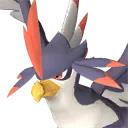 Nitewing ×
  Ribbuny
 Eikthyrdeer (2710)
 Jetragon ×
  Frostallion
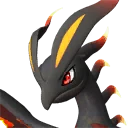 Eidrolon Ignis (140)
In the third row the target of 111 sits one point from Frostallion Noct (110), yet the child is Eidrolon Ignis, 29 points away. Frostallion Noct is not in the pool, so distance is irrelevant.
Tied distances
There is a tie-break rule in the algorithm: if the target sits the same distance from two Pals, the higher rank wins.
The case cannot occur in the current data. All 299 ranks are multiples of 10, and the target always ends in 1 or 6, so the distance to any Pal ends in 1, 4, 6 or 9. Two distances can never be equal. The rule exists as insurance against a future rebalance.
75 Pals the formula can never produce
All 299 Pals have a rank, but only 224 are eligible to be the child. The other 75 sit outside the pool:
- The five legendaries and the nine tower bosses: Jetragon, Frostallion, Frostallion Noct, Necromus, Paladius
- Every elemental variant — Foxparks Cryst, Jolthog Cryst, Incineram Noct, Elphidran Aqua and the rest
- The Terraria collaboration Pals: Eye of Cthulhu, Enchanted Sword, the slimes
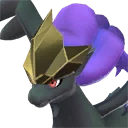 Frostallion Noct,
  Necromus,
  Paladius
They breed normally as parents. They cannot be produced by the average, so the fixed pairing table is the only way to obtain one.
The override table wins
The game ships a fixed pairing table, 258 rules in the official data. If your two parents appear in it, the formula is skipped entirely and the table decides. Everything in the list above depends on it.
| Parent | Parent | Child |
|---|---|---|
| Relaxaurus | Sparkit | Relaxaurus Lux |
| Frostallion | Helzephyr | Frostallion Noct |
 Relaxaurus
 Sparkit
 Relaxaurus Lux
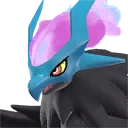 Helzephyr
A large block of the table is just "same species × same species = same species". Those entries matter most for the Pals outside the pool: without them, two legendaries would hatch something unrelated.
The official table has a parent-gender column, and a few pairings produce different children depending on which parent is female. The site has no gender model, so it reports the female-parent result.
In practice
The formula is for understanding the system. To plan an actual egg, the breeding calculator takes two Pals and returns the child, or works backwards from a target Pal to every pair that produces it. The breeding path finder takes the Pals you own plus a target and returns the chain with the fewest eggs.
Rank has nothing to do with strength. It is a sort key. The lowest in the pool is Aegidron at 30, the highest is Teafant at 3070. Getting a strong low-rank Pal usually means pairing two low-rank parents, not two strong ones.
 Teafant at 3070. Getting a strong low-rank Pal usually means pairing two low-rank parents, not two strong ones.
Every egg costs one Cake: 5 Flour, 8 Red Berries, 7 Milk, 8 Eggs, 2 Honey. What throttles a breeding operation is nearly always wheat and ranch output rather than the pairings themselves.

Every number on this page comes from the same data the breeding calculator runs on, so the two will never disagree.